Identifying quality interventions with STEPS

Use the STEPS tool to select evidence-based resources.
In addition to whole-school approaches to prevent bullying, schools can adopt specific approaches or programs tailored to the needs of their community. There are many programs, interventions and resources that focus on bullying and cyberbullying prevention, and on wellbeing and relationships more broadly.
STEPS
The steps to examine programs and approaches for schools (STEPS) decision-making tool is designed to assist schools to select the most appropriate, evidence-based resources to meet their needs.
There is a wide range of frameworks, strategies, resources and programs that aim to counter bullying available to schools. Some of these have a strong theoretical basis and solid evidence. Others can lack theory or evidence and do not align with the educational context.
Programs and resources for preventing bullying are most effective when they are tailored to the specific needs of school communities and disadvantaged groups. Schools need to select bullying prevention resources that match their specific goals and needs, and that can be implemented in their specific school context in a continuous and sustainable way.1
Each school needs to determine their own strengths and needs, as well as its resources and constraints for implementing an approach for countering bullying.
Downloadable resources
The following STEPS resources are available for all schools:
Introductory video
The following video (4 minutes 40 seconds) provides a brief overview of the STEPS decision-making framework, which helps schools to select appropriate and evidence-based anti-bullying programs and approaches.
An introduction to STEPS
[Thoughtful music plays. bright coloured blocks appear on screen accompanied by text displaying key words from speaker]
STEPS is a decision-making tool to help schools choose appropriate and evidence-based anti-bullying programs and approaches.
For Australian schools that want to avoid using inappropriate or ineffective programs steps provides a robust, transparent and comprehensive process to selecting an approach to bullying prevention
Overview
STEPS facilitates local decision making, builds school capacity
and highlights the many aspects relevant in selecting bullying prevention programs
STEPS guides schools to answer three overarching questions:
[Questions displayed on screen]
does the approach work?
will it work in our school?
and how will we know it has been effective?
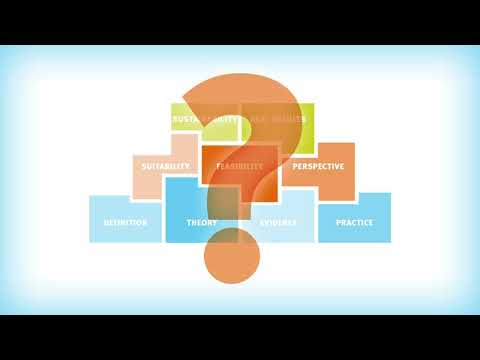
[Key concepts are displayed in building blocks which appear on screen like a jigsaw puzzle]
These three questions are explored through the nine concepts of:
definition
theory
evidence
practice
suitability
feasibility
perspective
sustainability
and real results.
Each of the nine concepts has a key question which the school needs to consider.
[Text displaying concept questions appear on screen while speaker reads]
Definition - is the approach based on a contemporary understanding of bullying that is consistent with the school's definition?
Theory - is the approach based on a sound theory that draws on the existing knowledge from previous research in bullying?
Evidence - does the approach have evidence from well-designed research which shows measurable change in behavior?
Practice - have other schools use this approach and achieved positive outcomes?
Suitability - does the approach address the target students and needs that the school has identified?
Feasibility - is the approach feasible and practical in the school context?
Perspective - is the philosophical perspective underpinning the approach compatible with the school's approach to behaviour learning and student wellbeing?
Sustainability - can the school implement and sustain the approach as required for it to be effective?
and real results - does the approach indicate how outcomes will be measured and time frames within which to expect to see real results?
The STEPS image shows that the nine concepts in the framework are interrelated and are all important to comprehensively examine an approach the framework is flexible so that schools can start with the most relevant concept for them and progress in any order.
To guide schools to answer the nine key questions steps provides numerous prompt questions.
Schools should be able to find all the information they need to respond to the prompt questions in a program manual, or website as well as in their annual plan school, policies and data, and from members of the school community.
Extensive information and resources to support schools to use steps are available on the bullying no way website at bullyingnoway.gov.au/preventingbullying/steps.
Schools are also encouraged to send any feedback and questions to
STEPS is an important tool for ensuring you select effective
and appropriate programs and approaches
so that your schools' resources and efforts
will make a real positive and lasting difference for students
[Music]
- Sae-Koew, J., Gonsalkorale, K., & Cross, D. (2024). Protecting children and adolescents from cyberbullying: An evidence review of risk and protective factors and effective interventions. NSW Government.